


Distinguished delegates,
It is a privilege to speak before you at this highly relevant Conference.
Unfortunately, other commitments prevent me from being in person with you today.
Recent geopolitical developments have significantly reshaped Europe’s energy sector, prompting a strategic shift toward policies aimed at further diversifying energy sources and supply routes, as well as drastically accelerating the energy transition.
Four years after the start of Russia’s war in Ukraine, the achievements of the EU in the energy sector appear impressive.
Russian gas imports to the EU dropped from 45% in 2021 to 13% in 2025; and by the end of 2027, imports will be banned. In 2024, more than 78 GW of new wind and solar power was added, saving 14 bcm of natural gas.
Nevertheless, we should recognise our significant shortcomings, which stem from persistent systemic challenges. After Russia’s war in Ukraine caused a crisis, electricity costs increased sharply and continue to be much higher compared to major trading partners such as the US and China.
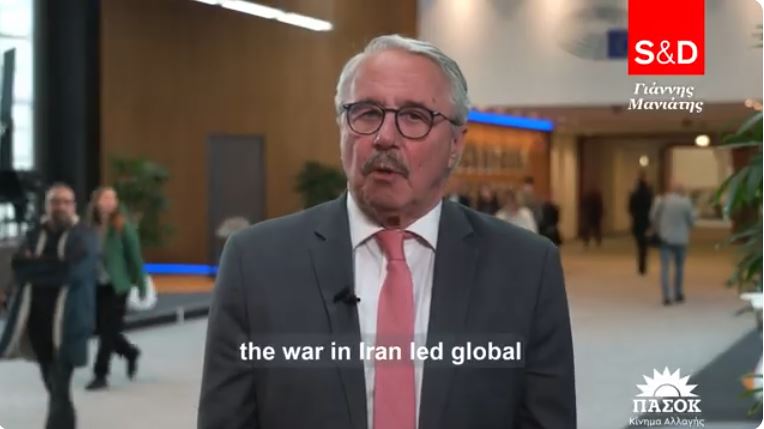
Recently, the war in Iran led global oil markets in their largest disruption in history, creating significant pressures on oil prices.
Closing the Hormuz Strait would impact the global economy, including Europe, since roughly 25% of seaborne oil and nearly 20% of LNG exports pass through it.
In conclusion, our external reliance on fossil fuels, weakened industry competitiveness, rising energy poverty, limited innovation, and infrastructure gaps, highlight the need for new initiatives to modernize the energy sector.
I am convinced that a more balanced policy framework is required in Europe to ensure equal promotion of sustainability, affordability, and strategic autonomy.
Within this framework, natural gas will serve as a transitional energy source. The primary impetus for change will be electrification, supported by emerging technologies such as carbon capture and storage (CCS) and new energy carriers including hydrogen.
In this European undertaking, Southeast Europe and the Eastern Mediterranean—particularly Greece and Cyprus—are positioned to play a significant and influential role.
The European Union should provide neighbouring regions with a robùst European perspective, and EU Member States with significant involvement, such as Greece, must actively contribute to this renewed outlook.
Unfortunately, for many years, the energy potential of Southeast Europe and the Eastern Mediterranean has been constrained by complex geopolitical factors, significant heterogeneity, fragmentation within the energy sector, limited regional cooperation, suboptimal governance, and obstacles to energy access.
To effectively address these challenges, it is essential to leverage regional cooperation mechanisms, such as the Energy Community and Central and Southeastern Europe Energy Connectivity (CESEC) in Southeast Europe, as well as EastMed Gas Forum (EMGF) in the Mediterranean.
Provided certain conditions are met. These include adhèrence to international law and the United Nations Convention on the Law of the Sea (UNCLOS), mutual respect for national sovereignty, among other factors.
Greece, because of strategic decisions initiated in 2010, has established itself as one of Europe’s primary energy gateways. The country hosts the Trans Adriatic Pipeline (TAP), which supplies gas from the Caucasus region, along with the upgraded Revithousa LNG Terminal and the FSRU in Alexandroupolis, facilitating the import of LNG from international markets. Greece also operates the IGB pipeline for northbound gas transmission and is actively developing a fully operational Vertical Corridor, utilising existing regional gas infrastructure.
Post-2015 Greek Governments should have expedited these initiatives, further advanced the East Med project, and progressed the national hydrocarbons programme.
The Government must address the underlying factors that have disrupted our plans in the past. In hydrocarbons explorations, we have had before international agreements with major energy companies which did not lead to drilling. Additionally, it is imperative that US-EU initiatives aimed at activating the Vertical Corridor yield prompt results, as ongoing developments will not indefinitely support our planning. The European decision to reduce reliance on Russian gas and prior U.S. policy initiatives have positively influenced our objectives; however, any further delays pose significant risks. For instance, if spot market LNG prices stabilize at elevated levels—potentially due to factors involving the war in Iran—it will become increasingly challenging to finalize long-term supply agreements and secure capacity commitments for the Vertical Corridor from Southeast European countries. There is also a concern about other competitive routes to supply gas to Ukraine.
In terms of electricity, Greece maintains interconnected grids with its eastern, northern, and western neighbours, and plans are underway to extend connections southward to Egypt, Cyprus, and Saudi Arabia.
The successful execution of these projects necessitates strong leadership and thorough long-term planning by the Greek Government. Initiatives such as the Great Sea Interconnector and GREGY have the potential to establish Greece and Cyprus as central electricity hubs for Southeast Europe and the Mediterranean region. An optimized Vertical Corridor, bolstered by additional infrastructure—such as new FSRUs in Greece and an increased capacity of the IGB—can significantly enhance Greece’s geopolitical and economic position.
Finally, Greece holds increased responsibility within the region, playing a dual role. As an active regional participant, it should foster enhanced cooperation, exemplified by cross-border projects. As a member state of the European Union, Greece must advocate for targeted initiatives for the region.
With these, I extend my best wishes for a successful and productive conference.
Thank you.