

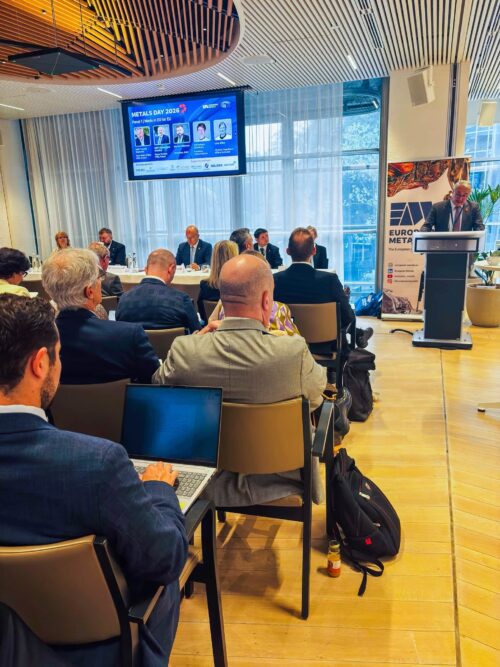
Με επιτυχία πραγματοποιήθηκε στο Ευρωπαϊκό Κοινοβούλιο η εκδήλωση που διοργάνωσε ο Αντιπρόεδρος των Ευρωπαίων Σοσιαλιστών και Δημοκρατών (S&D) και Επικεφαλής της Ευρωομάδας του ΠΑΣΟΚ, Γιάννης Μανιάτης, στο πλαίσιο της Ημέρας Μετάλλων 2026 (Metals Day 2026). H εκδήλωση συνδιοργανώθηκε με την European Metals, τον ευρωπαϊκό σύνδεσμο βιομηχανιών μη σιδηρούχων μετάλλων, που εκπροσωπεί περισσότερες από 900 παραγωγικές μεταλλουργικές μονάδες απασχολώντας άμεσα 500.000 εργαζομένους.
Σε μια κρίσιμη χρονική συγκυρία για το μέλλον της ευρύτερης ευρωπαϊκής βιομηχανίας, ο Έλληνας Ευρωβουλευτής κατά τη διάρκεια της ομιλίας του ανέδειξε τη σημασία μια νέας, φιλόδοξης και ισχυρής και βιομηχανικής πολιτικής που θα ενισχύει την παραγωγή εντός της ΕΕ, θα επιταχύνει την απανθρακοποίηση και θα δημιουργεί ποιοτικές θέσεις εργασίας.
Με την ευρωπαϊκή παραγωγή να αντιπροσωπεύει μόλις το 14% του ΑΕΠ της ΕΕ, τις ενεργοβόρες βιομηχανίες να δέχονται ισχυρές πιέσεις λόγω του κόστους ενέργειας, αλλά και τις εξαρτήσεις της Ένωσης σε στρατηγικούς τομείς να εντείνονται, η ενίσχυση της ευρωπαϊκής παραγωγικής βάσης αποτελεί μονόδρομο.
Ο Ευρωβουλευτής του ΠΑΣΟΚ, έκανε εκτενή αναφορά στην ανάγκη η έννοια του “Made in Europe” να αποκτήσει πραγματικό περιεχόμενο σε όλη την αλυσίδα αξίας. Τόνισε ακόμα, ότι δεν αρκεί η τελική συναρμολόγηση ενός προϊόντος να πραγματοποιείται στην Ευρώπη, αλλά οι κρίσιμες πρώτες ύλες και τα βασικά του εξαρτήματα να παράγονται σε αυτή.
Στο πλαίσιο αυτό, ανέδειξε τον στρατηγικό ρόλο των μετάλλων στην οικοδόμηση ευρωπαϊκής ανθεκτικότητας και αυτονομίας, η οποία όπως υπογράμμισε δεν θα μπορέσει να επιτευχθεί χωρίς καθαρή, προβλέψιμη και οικονομικά προσιτή ενέργεια.
Αναφερόμενος στην Ελλάδα, ο Γ. Μανιάτης επισήμανε τη σημασία της βιομηχανίας μετάλλων για την ελληνική οικονομία και τις τοπικές κοινωνίες, τονίζοντας ότι η πράσινη μετάβαση δεν μπορεί να προχωρήσει χωρίς μια ισχυρή και ανταγωνιστική ευρωπαϊκή βιομηχανία, ικανή να διατηρεί την παραγωγή, τις επενδύσεις και τις ποιοτικές θέσεις εργασίας στην Ευρώπη.
«Το “Made in Europe” πρέπει να αποκτήσει πραγματικό περιεχόμενο το οποίο θα συμβάλει στην ανθεκτικότητα και την αυτονομία της Ένωσης. Σε αυτή την κατεύθυνση, η Ευρωπαϊκή Βιομηχανία Μετάλλων μπορεί να παίξει πρωταγωνιστικό ρόλο» σημείωσε ο Γ. Μανιάτης και συνέχισε «Δεν υπάρχει πράσινη μετάβαση χωρίς μέταλλα. Κάθε ανεμογεννήτρια, μπαταρία ή καλώδιο, εξαρτάται από αυτά. Αν η Ευρώπη θέλει να πρωταγωνιστήσει στην πράσινη μετάβαση, πρέπει να παράγει η ίδια τα υλικά πάνω στα οποία βασίζεται αυτή».

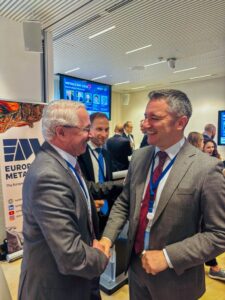
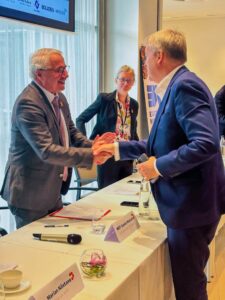
Ακολουθεί το πλήρες κείμενο της ομιλίας:
“Dear James,
Dear colleagues,
It is a pleasure to welcome you here in the European Parliament for this breakfast discussion on the occasion of Metals Day 2026.
Our discussion today could hardly be more timely.
Parliament has published its Draft Report on the Industrial Accelerator Act this month, and we are entering the crucial phase of amendments and political negotiations. Therefore, the IAA is no longer a theoretical discussion about Europe’s industrial future.
For decades, Europe assumed that industry would take care of itself. The absence of a coordinated and ambitious European industrial policy has left its mark. And the numbers are stark.
Manufacturing today accounts for around 14% of EU GDP. Production in our energy-intensive industries has fallen substantially since 2021, due to the high fossil-based energy prices and the global competition. And over the past decade, the trade balance of our energy-intensive industries has steadily deteriorated, with basic metals accounting for a significant part of this decline.
At the same time, our strategic dependencies have deepened significantly.
In 2024, 79% of EU battery imports came from China. China controls more than 80% of global solar manufacturing across the value chain. This is not simply a question of competition. It is a question of Europe’s industrial resilience, our clean transition and our energy sovereignty.
This is why the Industrial Accelerator Act matters.
Its objective of bringing manufacturing to at least 20% of European GDP by 2035 is an ambition that I believe many of us in this room share.
For the first time, Europe is proposing to systematically use the enormous power of public procurement and public support to favour European-made and low-carbon products.
For my political family this legislation is a priority!
Because the IAA can mark at the same time the end of Europe’s industrial naivety and the beginning of a more strategic European industrial policy: one that uses the strength of our Single Market to support European production, industrial decarbonisation and quality jobs.
But the Industrial Accelerator Act must be more than a rescue operation for industries under pressure. It should become the backbone of a ten-year industrial strategy for Europe: protecting strategic industrial capacities where they are at risk, accelerating their decarbonisation, and investing in the sectors and technologies where Europe can lead.
And this brings me to the central topic of this morning: What should “Made in Europe” actually mean?
There is an important difference between “Made in Europe” and merely “Made with Europe.” For me, a credible “Made in Europe” approach must answer three simple questions:
First, where is the value created?
“Made in Europe” cannot simply be a label attached to a product that undergoes its final assembly here while most of its strategic value is created elsewhere.
If we assemble a battery in Europe, but the critical materials and components inside are overwhelmingly extracted, processed and refined elsewhere, we have not eliminated our dependency. We have simply moved it one step down the value chain.
That is why we need an approach that looks at the entire industrial value chain (upstream, midstream and downstream) including extraction, processing, refining, smelting, manufacturing and recycling.
For example, the proposal already contains EU-origin requirements for battery components and systems. But given the scale of our dependencies, we should examine how to go further upstream and strengthen Europe’s position in battery raw materials and strategic metals. This is also one of the core questions identified for today’s Metals Day discussion.
Second, how is the value created?
Here Europe has a major competitive asset. European producers operate under some of the world’s most demanding environmental and climate standards. And Europe’s recycling capacity can dramatically reduce the carbon footprint of metal production.
The Draft Parliament report takes an important step by recognising the strategic role of secondary raw materials and recycled metals. It specifically recognises recycled aluminium, steel scrap and recycled critical raw materials as important both for industrial resilience and for reducing greenhouse-gas emissions.
We should build on this. Metals have one extraordinary advantage: they can be recycled again and again while retaining their essential properties. So, circularity should not be treated merely as an environmental obligation. It should become a European industrial advantage. A tonne of metal recovered and recycled in Europe means fewer external dependencies, lower emissions and more value retained in our economy.
Third, who shares in that value?
Public procurement represents around 14 to 15% of EU GDP. That gives us enormous leverage. Yet the Commission proposal does not provide for mandatory social conditionality. For us, that is a major gap that must be addressed.
When European taxpayers support industrial production, through procurement, public support or other incentives, they have the right to expect something in return. This could not be anything else than quality jobs, fair wages, collective bargaining, investment in skills and training, and a long-term commitment to producing and investing in Europe.
And this should not be seen as a burden on European industry. On the contrary. It is the social contract that gives an ambitious European industrial policy its legitimacy.
Of course, Europe does not operate in isolation. But its openness doesn’t mean dependency. Therefore, we need to combine openness with clear conditions: reciprocity, fair competition, respect for social and environmental standards, economic security and strong safeguards against circumvention.
Many of our partners already have industries deeply integrated into European value chains, and this reality must be considered. But Europe must also make sure that third countries cannot become a back door for products that would otherwise not qualify as European.
The same principle should apply to foreign investment. Foreign investment in Europe’s strategic industries can be valuable and should remain welcome. But in strategic sectors, investment must generate real European added value. That means European jobs, technology and know-how embedded in our economy, including industrial capacity that remains in Europe.
Of course, the elephant in the room is always the cost.
Lead markets, European preference and green procurement are essential. Producers investing billions in decarbonisation need customers willing to value cleaner European production. But demand-side measures alone will not keep an aluminium smelter operating if it faces structurally higher electricity prices than its international competitors.
As a former Energy Minister, I know that there are no shortcuts here.
Energy-intensive industries need affordable, clean and predictable energy. And Europe must finally address the structural causes of this vulnerability rooted in our dependence on imported fossil fuels.
Finally, allow me a personal note.
In Greece, we know what the metals industry means for a region and for its people. Greece has an important bauxite, aluminium, copper and metals-processing industry. But these industries are not simply figures in an industrial strategy.
They are communities. They are families. They are skilled workers. They are young engineers deciding whether they can build their future at home or whether they must leave. This is why the green the industrial and the social transition cannot be separated. They must advance together.
Dear colleagues and friends,
As the European Parliament begins its work on the Industrial Accelerator Act, I believe that our objective should be clear.
To build a “Made in Europe” that has substance and translates as:
Made here.
Made clean.
Made with quality jobs.
But above all made for Europe’s shared prosperity.
Thank you!”