


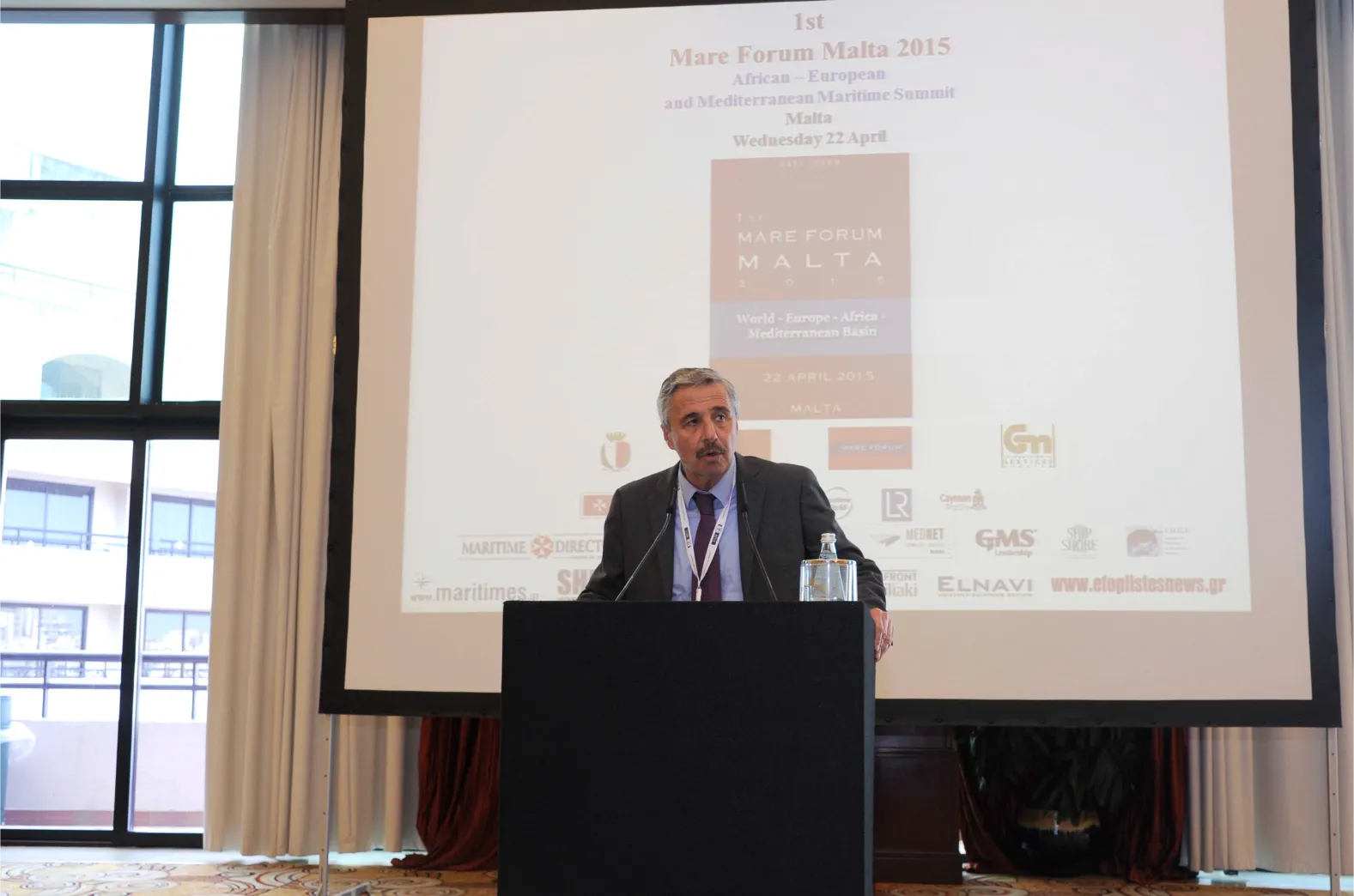
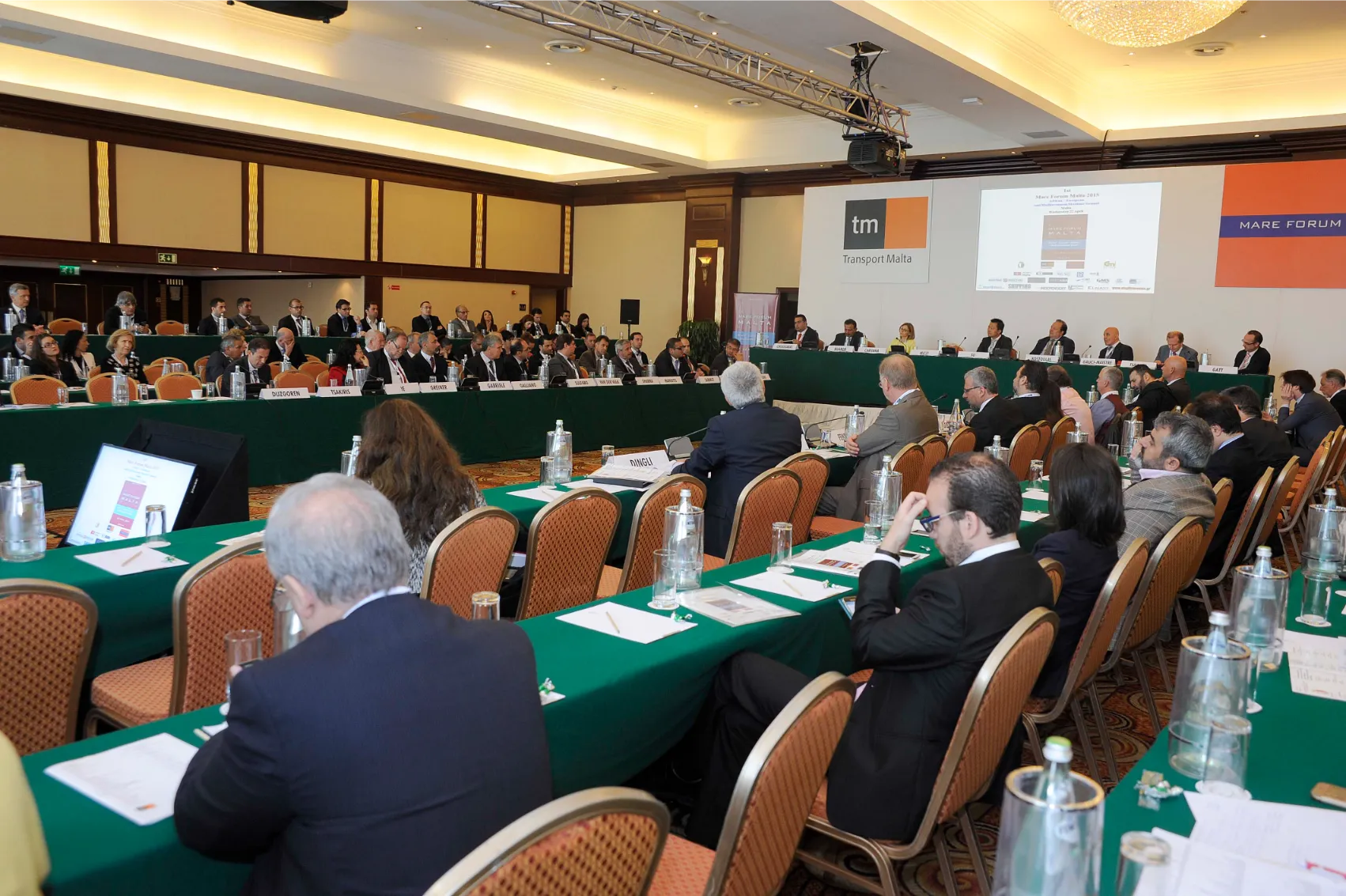
Ο πρώην Υπουργός Περιβάλλοντος, Ενέργειας και Κλιματικής Αλλαγής, καθηγ. Γιάννης Μανιάτης, συμμετείχε στις εργασίες του διεθνούς συνεδρίου “Διερευνώντας το μέλλον του Εφοπλισμού και της Ναυτιλίας στη Μεσόγειο, την Αφρική και την Ευρώπη” που έλαβε χώρα στη Μάλτα στις 22 Απριλίου στο πλαίσιο του Mare Forum 2015, όντας από τους κεντρικούς ομιλητές του συνεδρίου.
Κατά την ομιλία του ανέλυσε εκτενώς τις σύγχρονες προκλήσεις που αφορούν στην προώθηση της ενεργειακής ασφάλειας σε συνθήκες γεωπολιτικής αναστάτωσης, αλλά και τη σκοπιμότητα χρήσης της ενέργειας ως παράγοντα ανάπτυξης, περιφερειακής συνεργασίας και σταθερότητας. Στο πλαίσιο αυτό επεσήμανε τη σημασία της Ελλάδας ως ενεργειακού κόμβου, αναφερόμενος, μεταξύ άλλων, στον αγωγό TAP, στις δυνατότητες μεταφοράς υγροποιημένου αερίου (LNG) από τον ελληνικό εμπορικό στόλο, στην τριμερή συνεργασία Ελλάδας-Κύπρου-Αιγύπτου και την αντίστοιχη με το Ιςραηλ, στα σχέδια ανάπτυξης των αγωγών Eastmed ( Ισραήλ, Κύπρος, Ελλάδα, Ιταλία), Vertical Corridor (Ελλάδα, Βουλγαρία, Ρουμανία) και Hellenic Stream (Τουρκία, Ελλάδα, FYROM, Σερβία, Ουγγαρία).
Τόνισε ότι η ελληνική ενεργειακή στρατηγική χαράσσεται σε συμβατότητα με τις προδιαγραφές της ΕΕ, στο πλαίσιο της διαφοροποίησης των ενεργειακών πηγών και ροών και στο πνεύμα της συνεργατικότητας και συμπληρωματικότητας.
Ο κ. Μανιάτης αναφέρθηκε, επίσης, στα ειδικότερα προβλήματα της Μεσογείου, εστιάζοντας στις τραγικές διαστάσεις που προσλαμβάνει το πρόβλημα της παράνομης μετανάστευσης και στην ανάγκη αντιμετώπισης της Κλιματικης Αλλαγής.
Κατά την παραμονή του στη Μάλτα, ο κ. Μανιάτης παραβρέθηκε, επίσης, στην κηδεία των θυμάτων της πρόσφατης ανθρωπιστικής τραγωδίας στη Μεσόγειο, που έλαβε χώρα σήμερα στη Βαλέττα.
Ακολουθεί το αναλυτικό κείμενο της ομιλίας του καθ. Γιάννη Μανιάτη.
1st Mare Forum Malta 2015
African – European and Mediterranean Maritime Summit
“Exploring the future of the shipping, marine & maritime industries
in the Mediterranean, African and European region”
Grand Hotel Excelsior, Malta (22.4.2015)
Prof. Yannis Maniatis, f. Minister of Environment, Energy and Climate Change
Ladies and gentlemen,
It is a great honour to be present here today.
The history of the oil industry is rife with boom – and – bust cycles, winners and losers. Historically the price of oil falls, and then it rises. Oil was as high as USD 145 in summer of 2008. It was then around USD 40 by December. By summer 2011 it was back above USD 120. While the peaks and valleys may be more severe than they once were, this cycle is the nature of the market. The winners are the ones who take advantage of both the highs and the lows.
The question is not whether the price of oil will rise again. It will rise, though how far is debatable. Rather the question is, now that the price is so low, what does it mean? Or rather, what could it mean? What choices does it enable us to make, to take advantage of this opportunity?
In Europe, our challenge today is to promote energy security in the context of the geopolitical turmoil all around us; but it is also about using energy as a factor for regional cooperation, growth and stability.
Europe requires new energy supply options, in addition to those from the existing routes. It is needless to refer to the Ukraine crisis to support this position. Suffice to mention that in the next 15 years it is estimated that Europe will need an extra 100 bcm/y of natural gas. The problem is obvious.
The EU is the largest energy importer in the world, importing 53% of its energy, at an annual cost of around €400 billion, while an appropriately interconnected European energy grid could save consumers up to €40 billion a year.
In February, a Framework Strategy for a Resilient Energy Union with a Forward-Looking Climate Change Policy has been adopted by the European Commission. The Energy Union is based on the three long-established objectives of EU energy policy: security of supply, sustainability and competitiveness.
The Energy Union means in particular:
• Solidarity Clause: reducing the dependence on single suppliers and fully relying on their neighbours, especially when confronted with energy supply disruptions. With more transparency when EU countries make deals to buy energy or gas from countries outside the EU;
• Energy Flows, as if it were a Fifth Freedom: that of free flow of energy across borders – strictly enforcing the current rules in areas such as energy unbundling and the independence of regulators. Redesigning the electricity market, to be more interconnected, more renewable, and more responsive.
• Energy Efficiency First: fundamentally rethinking energy efficiency and treating it as an energy source in its own right so that it can compete on equal terms with generation capacity;
• Transition to a Low-Carbon Society, ensuring that locally produced energy – including from renewables – can be absorbed easily and efficiently into the grid; promoting EU technological leadership, through developing the next generation of renewables technology and becoming a leader in electromobility.
European energy policy should cease to be a fief of the few big countries. More synergies are required in order to tackle both goals of energy security and averting climate change. The Juncker package of €300 billion, has to play a crucial role in these issues.
Greece has a clear strategic goal:
To facilitate access to diversified gas sources for the broader South East European and East Mediterranean region, as well as to promote competitive and affordable prices, which in our region, are on average, about 35% higher than in north Western Europe.
Regarding major gas infrastructure Greece’s policies have been based on our commitment for:
First, a more integrated, competitive and sustainable EU internal market, connected with reverse flow interconnectors.
Second, a Europe where no state, region or island is isolated and citizens throughout, can enjoy the benefits of affordable and competitively priced energy.
Third, secure supplies of both traditional sources from notably Russia and Algeria and new diversified gas, reaching Europe through new, multiple supply routes: from the Caspian via the Southern Corridor as well as from the East Mediterranean.
Fourth, LNG facilities, served by Greece’s important shipping fleet, which I call the world’s longest floating pipeline,
Fifth, enhanced Solidarity with our partners, contributing to their energy security by facilitating access to diversified sources and routes and creating conditions for convergence of prices.
As a result of implementing these objectives, our gas infrastructure strategy aims at an enhanced Greece’s role in the international energy landscape. We have been driven by the fact that in the next decade Greece can be and will be at the centre of an integrated and interconnected South East European market.
Greece, being on the tip of this region, isworking to generate synergies, among different countries in the region, to promote peace, security and regional cooperation.
Few months ago, we held the first trilateral summit between Greece, Cyprus and Egypt, at the level of Heads of State and Government.
Greece has also strategically intensified bilateral relations with Israel, including in the fields of energy and the environment.
Greece, Cyprus and Malta have close cooperation on maritime issues.
Russia (as a strategic energy partner), Algeria, Turkey, Bulgaria, Albania are countries with which Greece has constructive energy relations.
This process offers rich opportunities and lays the foundations for strategic cooperation for stability, economic growth and of course, energy security.
The fact that 12 of the EU’s Projects of Common Interest – 7 of which are gas related – concern Greece shows our country’s importance for Europe’s energy security and its prospects as a transit and pricing hub in South East Europe.
Greece is participating in three large energy projects. What is unique about these three projects? That in an energy-hungry Europe, desperately trying to secure its supplies while at the same time reduce its dependency on its main providers, all three of these energy pipelines referred to new routes, new sources and new providers.
First of all, we have TAP and the Southern Corridor with its 10-20 bcm/y, which is already in an advanced state and we can be certain of its realization, which foresees the starting of the construction phase in Greece in 2016.
Second: the “Vertical Corridor”, involving initially, Greece-Bulgaria-Romania and Hungary. This Corridor does not consist of a single pipeline. Instead, it is about connecting the national networks of at least the four, and possibly more in the future, countries.
For Greece, the Vertical Corridor means, in practice, the IGB, a 200 million euros pipeline that will provide around 5bcm of natural gas per year.
The third project that we have initiated is the East-Med Pipeline, connecting the Levantine gas fields with Greece and Italy. In the long-term, East-Med with its around 8 to 12 bcm, will be a reliable option for exporting Levantine gas, and this is why Israel, Cyprus and Italy have publicly declared their support to the project.
So far I haven’t made any reference to the new Russian pipeline, the so-called “Turkish Stream”, which will stop at the Greek – Turkish borders. Turkish Stream will purportedly carry 63 bcm/year, pretty much the amount of natural gas that passes through Ukraine nowadays, 15 bcm of which will be used by Turkey.
During the last visit of the Greek PM to Moscow, it has been agreed with the Russian President, that from Turkey, the pipeline named as “Hellenic Stream” will cross northern Greece, in order to continue toward FYROM, Serbia, Hungary and other interested countries.
The new pipeline will be developed according to the European energy framework, in close cooperation with the European Commission and the other member States, in the framework of the principle of diversifying routes for providing natural gas. At the same time, the Greek energy strategy, to be successful, we need always to ensure that our choices are complementary and do not negate our existing strategic commitments.
We have also published a new upstream license tender for oil & gas exploitation for 23 offshore blocks in Ionian Sea and South of Crete.
Our policy has also involved building up Greece’s LNG capacities. We achieved PCI status for two offshore Floating Storage and Regasification Units (FSRU) projects as well as an underground storage facility, in the North Aegean.
Therefore, via the Vertical Corridor, besides TAP, the South East European region will have greater diversification with access to LNG from sources ranging from North Africa, the Gulf and even North America.
Greece is also developing its contribution for the European Energy Security issue, through the second upgrade of LNG terminal on Revithousa.
The total storage space will increase from 130.000 to 225.000 m3 and the available storage space for Users from 110.000 to about 200.000 m3 (i.e. 82%)
The marine works, will lead to the accommodation of larger ships with capacity up to 260.000 m3.
The project includes the necessary changes in the existing facility in order to make feasible the re-loading of gas to ships with size down to 20.000 m3.
The completion of the entire project is expected by the end of 2016, with an estimated cost of the project is 156 million €.
Over the last few years significant worldwide mobility has been observed, regarding new ways of Liquefied Natural Gas (LNG) uses.
A developing perspective in this context, is the Small Scale LNG applications, which may be divided into four main categories:
1. Road transportation of LNG to supply gas consumers who are away from the gas networks, or to supply isolated distribution networks
2. Marine transportation of LNG to supply small islands, mainly for electricity generation
3. Use of LNG as a road fuel (for trucks)
4. Use of LNG as a shipping fuel
In this framework, we have proceeded to the following:
1. Has launched the procedure for the installation of the first LNG loading station in order to supply trailers which will carry the LNG to consumers isolated from the gas network.
2. Has launched the procedure for the development of satellite small LNG storages and loading stations at coastal areas, LNG barge ships, etc.
3. Has joined the Poseidon-Med proposal to TEN-T, together with 27 other companies from the gas, marine and port business, in order to study all aspects of implementation of LNG supply to ships as fuel by 2025.
In this light, the Global Project “Implementing LNG Marine Bunkering in SE Europe through simultaneous Development of Critical Supply and Demand Side Installations”, is financed by the European Commission.
It aims to motivate Greek, Italian and Cypriot authorities to set-up actions for the shipping LNG bunkering and for the required retrofits to converse heavy oil fuelled vessel infrastructure, to LNG fuelled ships.
One of the outmost objectives of the Project POSEIDON – MED II, is the valorisation of the proposed intervention in the Greek market (HFO to LNG ships), in terms of both techno-economic and environmental terms.
The extensive Dissemination of the Project aims in Greek stakeholders (ship owners and operators) and the Greek public, along with the support of Ministerial and key Administrative Regions Authorities, where important ports of Greece, Cyprus and Venice from Italy are located and operate.
The Project ” Construction of necessary infrastructure in ports in order to supply ships with LNG as a Fuel”, has a budget estimation of 500 million € for the Greek side, and has been included in the newly released Juncker Plan.
Ladies and gentlemen,
In an international environment, no country can function in a vacuum. The volatile geopolitical scene does not leave room for complacency and internal divisions.
The humanitarian crisis in Meditterenean, is the crucial test of our European civilization. We do not need any more discussions. It is urgent to have an effective, combined, fully funded pan-European plan, in order to solve the problem of hundreds of thousands of hopeless human beings from Libya, Syria, Iraq.
We need full enforcement of FRONTEX powers.
Greece, Italy, Malta should lead the European Council to take and apply all the necessary decisions.
The energy system is in a constant state of change, evolution, rebalancing, and upheaval.
When we are looking toward the energy system of tomorrow, let us not be blinded by what is happening today. Short term changes are important, but what matters more to our societies is what we can expect in the long term. That’s what we need to get right. That’s what will have a lasting impact.
While oil prices remain low, policy makers from around the world should seize the chance to make meaningful changes to the way we produce, use and price energy.
It will be a global shame, for climate negotiations in Paris togo, without meaningful commitments and legally binding targets having been made and decided.
World leaders should not look only to what is happening today, but what tomorrow will bring.
Vision and leadership is what we need.
Thank you.